A Founder, a Force, and a Friend
It is fitting that news of Clem’s passing came during an HL7 International Working Group Meeting.
The organization he co-founded in 1987 is filled with people passionately pursuing the shared vision he championed for more than 40 years: getting health care data to flow seamlessly across systems and settings in service of improving health everywhere. Clem was a luminary in the field of biomedical informatics for his innovations in electronic medical records, clinical decision support, multi-institution health data exchange, and especially in the global standards that helped computers share and understand health data.
For those of us who worked closely with him, Clem was much more than a pioneer. He was a mentor, a provocateur, a visionary, a meticulous scientist, a caring clinician, and a relentless champion of interoperability in service of better care.
No one has had a greater influence on my professional life than Clem.
Unplanned, but unforgettable
I came to informatics by an unlikely path. I have had triple interests in computers, science, and health since I was young. Ultimately I pursued clinical training in the Doctor of Physical Therapy at Duke. But it did not take long before I realized that healthcare was not using information technology to its full potential. I kept thinking: we could make all this paperwork so much better for clinicians and patients if we leveraged computers. For my final research project, I decided to do a systematic literature review of whether electronic health records really could make a difference in healthcare.
I had no idea at the time, but that review changed my life.
I noticed that the most rigorous papers mostly came from one place: the Regenstrief Institute in Indianapolis. Reading their website I noticed they offered a post-doctoral fellowship in medical informatics. I didn’t know that such a field existed. But when I discovered this entire discipline where people combined interests in computers and health, and they were approaching their work through the scientific method, I knew then that informatics was what I had to do and that Regenstrief was where I wanted to do it.
So in 2003 I applied and was accepted, becoming the first physical therapist in such a program. This was great fortune for many reasons.
Chief among them was that the fellowship director was Clem — a titan of medical informatics.
I had no idea he would become my career-long mentor and friend.
Life is hard.
Clem began teaching that axiom within my first week, reinforcing it to all of us fellows countless times in our Friday meetings.
Over the preceding three decades, Clem had created one of the world’s first and most powerful electronic medical record systems, the Regenstrief Medical Record System. And he had shown conclusively that it could improve care through landmark studies like Protocol-based computer reminders, the quality of care and the non-perfectability of man and Reminders to physicians from an introspective computer medical record. He deeply understood the inherent complexity of introducing new technology into the intricate and dynamic fabric of healthcare delivery.
Like many aspiring informaticians, I began with a dream of building fancy applications for clinicians.
But early on, Clem showed me something deeper: that computers are always limited in their ability to help clinicians by the scope of the data available to them in a format they can make sense of. Too often, the data needed to make good decisions about individuals and populations was scattered across different, unconnected systems.
No one wants to be told their baby is ugly.
Clem was characteristically blunt in his assessments.
As budding informaticians, we had many “ugly baby” ideas. He was ruthless with ideas, but cared deeply for people. Although it takes a certain temperament to metabolize Clem’s direct feedback, he taught me to have strong convictions while holding them weakly.
Be bold, but demand data. Scrutinize your assumptions.
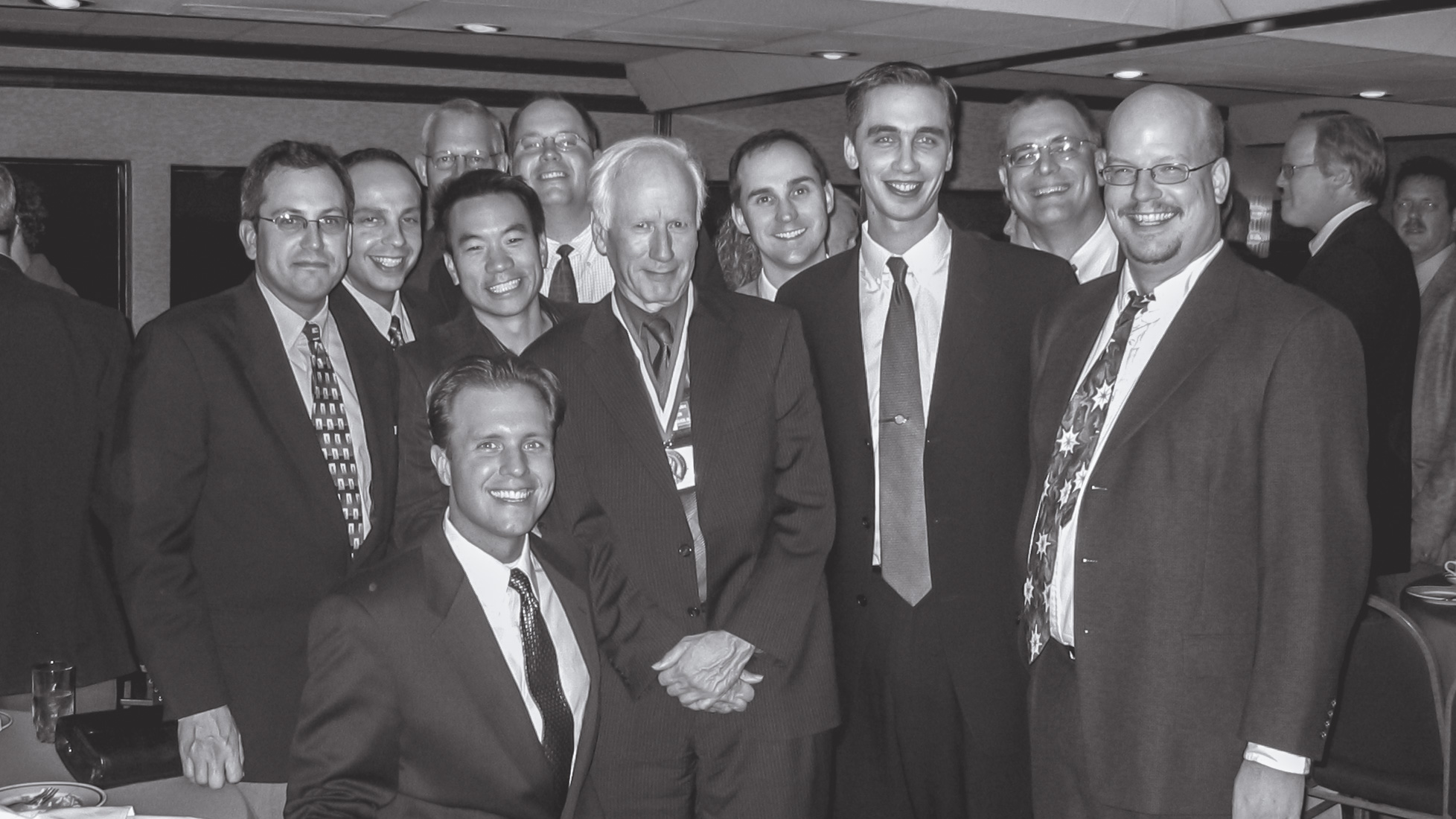
Clem with past and current fellows celebrating his 2004 Morris F. Collen award
Imagine a world without standards.
In the early 90’s I had explored the world of connecting synthesizers, sound modules, and computers through MIDI, and these experiences opened my eyes to the power of data standards as a foundation for innovation.
So the opening line of Data Standards in Health Care caught my attention: Imagine a world without standards.
Clem was one of the earliest pioneers in building bridges across islands of health data by developing and using data exchange standards. He introduced me to the fundamental challenge of semantic interoperability — making health data portable and understandable to different computer systems.
I didn’t realize it at first, but this endlessly fascinating journey toward interoperability would become the centerpiece of my career.
When I arrived, Regenstrief was expanding the Indiana Network for Patient Care from about five hospital systems to around a hundred institutions. We could pretty easily connect the data feeds using HL7 version 2 messages. But inside those messages, each test and measurement was identified with a local code and name. The receiving systems couldn’t understand all those idiosyncratic conventions.
A few years earlier, Clem and Stan Huff had spearheaded the development of LOINC (Logical Observation Identifiers Names and Codes), the international terminology standard for identifying health measurements, observations, and documents. By mapping local concepts to LOINC, we could make the systems in Indiana’s exchange actually talk to each other.
As Clem’s fellow, I led the effort to enhance LOINC’s model for radiology procedures and developed techniques for automatically mapping local codes. Because LOINC was designed to work inside HL7 exchange standards, Clem connected me to the HL7 community right away. There I found a passionate group of innovators who were working to create the technical specifications that would enable disparate systems to share health data.
Those early experiences got me hooked on the belief that open standards could unlock the potential for information systems to improve health decision-making and care.
When I finished my fellowship in 2005, Clem recruited me to stay on as faculty at the Regenstrief Institute and Indiana University.
And in 2006 when Clem left Regenstrief to join the U.S. National Library of Medicine, I became the Director of LOINC at Regenstrief, a role I held until 2019.
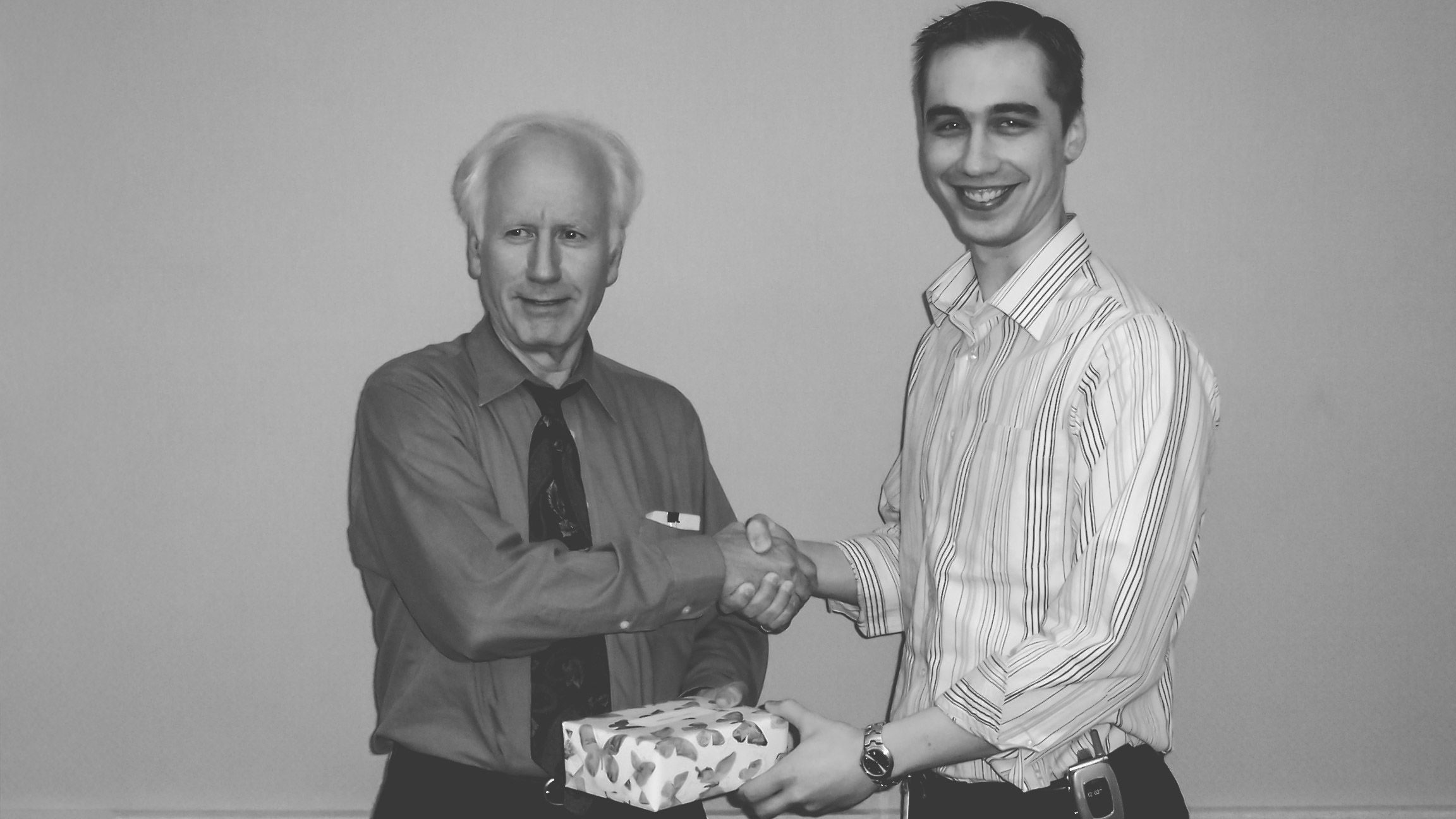
Clem presenting me with a medical informatics fellowship completion gift (2005).
LOINC
In my time as LOINC Director, it was a joy to see LOINC experience tremendous growth in adoption and new content. We were developing LOINC as an open standard, propelled by contributions from a growing, global user community. That momentum has continued through today. There are users in nearly every corner of the planet, and LOINC has become an official national standard in many countries.
Although Clem went to NLM, he never left LOINC. He continued as Chair of the LOINC Committee and remained deeply involved in LOINC’s development, returning once a month to spend a day with the LOINC team. Fueled by his usual staples of Oreos and Diet Coke, those sessions were always intense.
To the uninitiated, work sessions with Clem could be both intimidating and bewildering. As Bill Tierney recounts, Clem has a very nonlogical sequencing way of thinking about the world.
A conversation with Clem frequently jumps from strategy to deep technical detail to clinical biochemistry with no steps in between. After working with him for so long, I got pretty good at switching my brain into “Clem mode”.
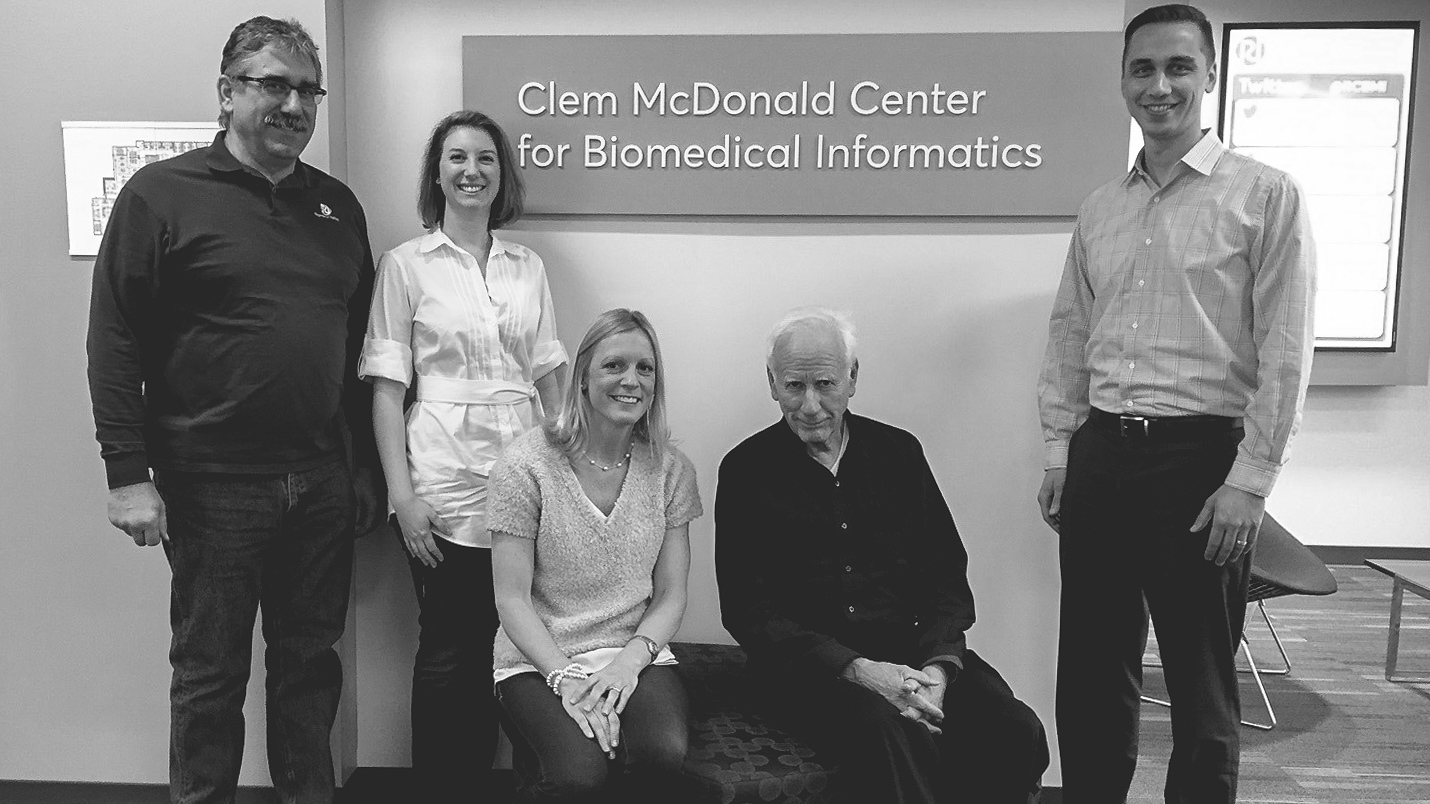
Clem with some of the LOINC team at the Regenstrief Center bearing his name.
Over that time, we expanded the content in LOINC vigorously. We were adding new terms to support the latest innovations in established domains like laboratory tests and clinical measurements, and developed new content models supporting exchange of patient-reported outcomes, clinical document types, genetic testing results, and more.
You can see the tremendous digital transformations that LOINC-coded data enables all around you. The hospital near you probably has probably “LOINCed” their lab data. In fact, you probably have LOINCed data on the phone in your pocket.
This global success was aided by the novel method we developed that enabled translations of LOINC into 18 variants from 12 languages.
But the journey was never only about creating terms; it was about connecting people, data, and systems, breaking down barriers to understanding, and enhancing health on a global scale.
LOINC’s success has always been a collective one.
Beloved around the world
“Elvis is in the building.” Sandy Poremba, his longtime assistant and the unsung Clem-whisperer behind so many accomplishments, would send the signal. The news would spread quietly but quickly through the office when Clem arrived.
This was partly because you rarely knew exactly when he would show up, even if you had his first scheduled meeting of the day. (Late night or early morning work sessions were known to suck him into a time vortex).
But also because people wanted his attention, his wisdom.
It wasn’t just at Regenstrief. At conferences like MedInfo or AMIA, HL7 Working Group meetings, national policy meetings. It was everywhere he went.
As leaders of LOINC, I had the great pleasure of traveling with Clem on many occasions.
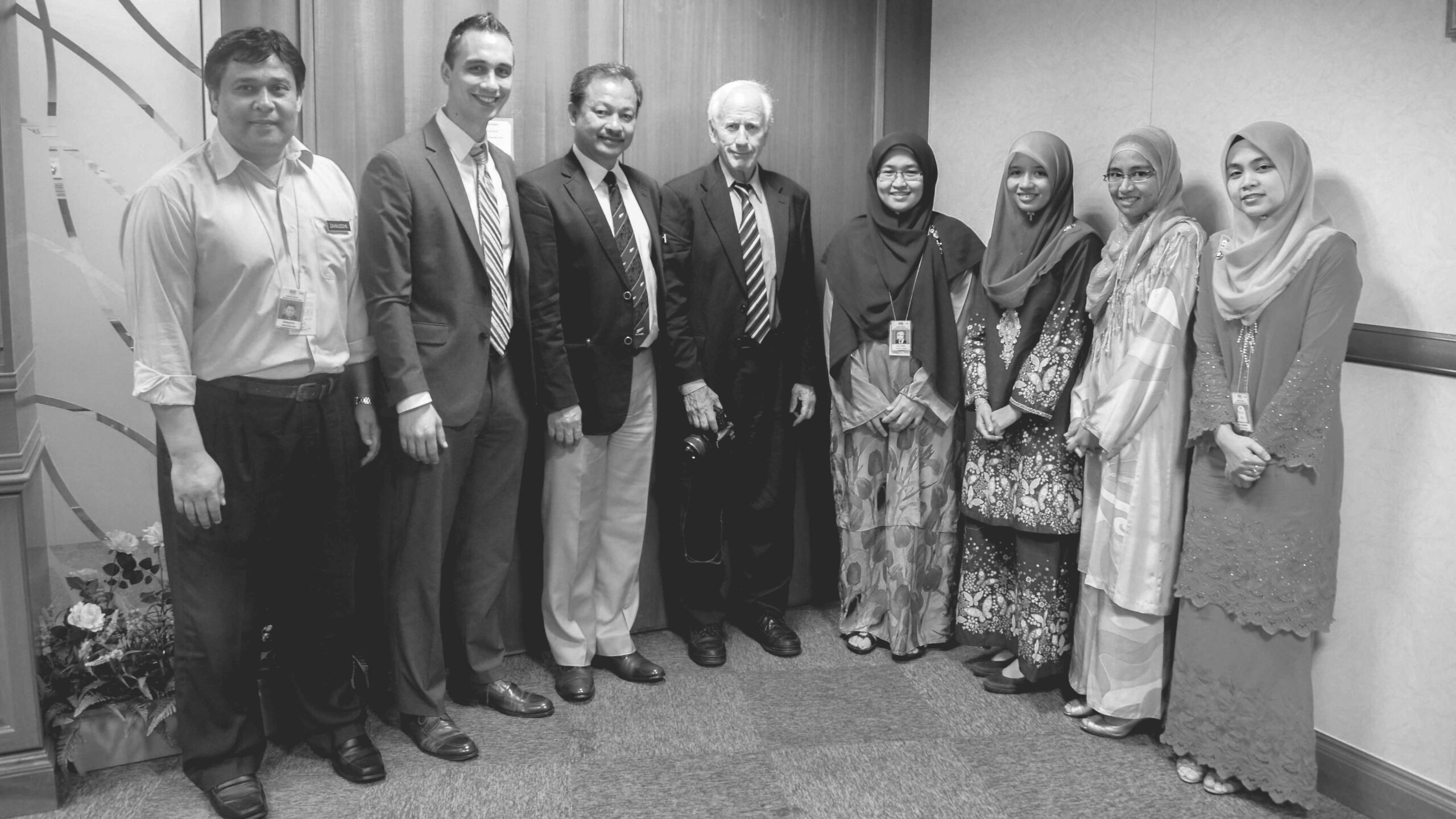
Meeting with Ministry of Health Malaysia
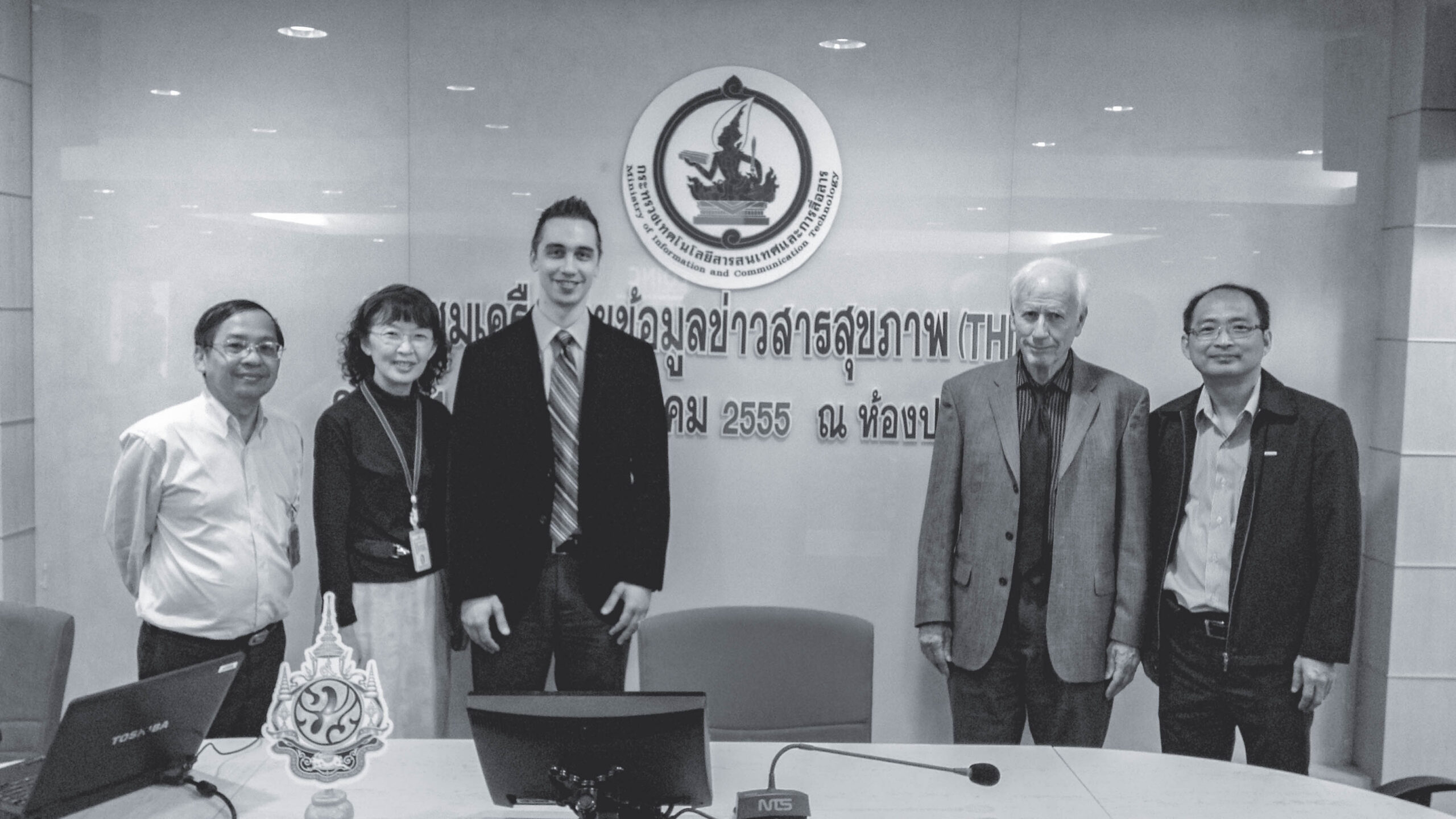
With hosts at meeting of THINK in Thailand

At Smith and Morehouse Reservoir, Utah
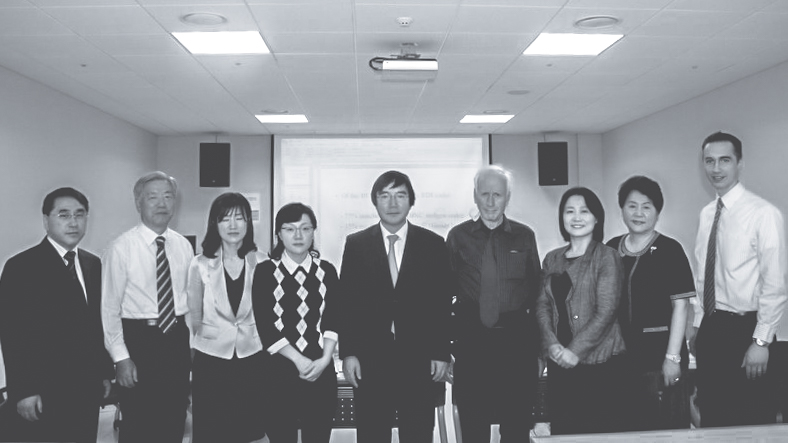
Meeting with Korean health leaders
It wasn’t just world leaders who loved Clem.
I remember vividly when my firstborn son was just two months old and my wife brought him into the office during a day Clem was visiting.
Immediately, Clem switched into his Donald Duck impression, eliciting huge grins (from both child and parents).
Whimsy and wit
Listening to a presentation by Clem was an adventure.
The pace was always frenetic, even in a keynote address. Slides whizzed by. Some with 200 words. Some with just “GET Slide from Paul”.
Apart from his “absent-minded professor” aesthetic, it was Clem’s characteristic wit, humor, and humility that made him so relatable.
Despite being one of the handful of people in the world who literally created the field of informatics, his style was approachable to everyone.
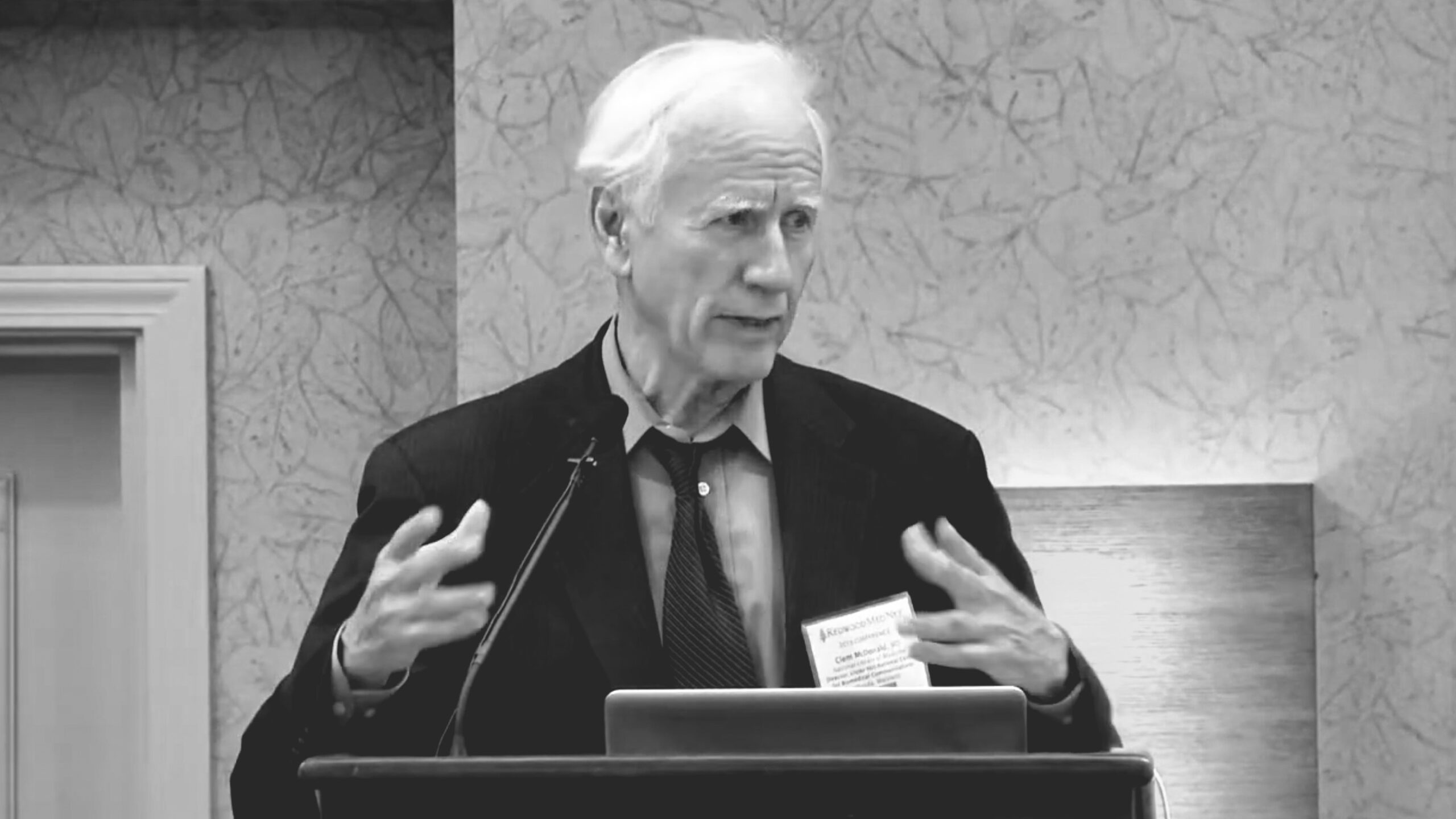
Clem giving a presentation in 2013.
While our mission to improve health around the world was serious, it didn’t mean that we took ourselves too seriously.
Anyway, it’s a little hard when the name of your standard sounds like “oink” and your mascot is a pink pig!
At the end of many LOINC meetings and presentations, Clem was known to pull out a bin of our pig keychain toys and start firing them into the audience like they shoot t-shirts into the stands at sporting events.

The infamous LOINC pig keychain. We’ve now exhausted the world’s entire supply.
There were bits of technical genius in what Clem did in his standards work and in previously unimaginable initiatives like a state-wide health information exchange. But his true superpower was that of building trust and a spirit of collaboration.
I took this lesson to heart and we intentionally cultivated LOINC’s community to foster that spirit of collective purpose. From easter egg terms to the brand voice and committee meetings that juxtapose hotly debated issues with camaraderie and shared purpose, LOINC always embraced the human aspect of informatics.
It’s not a co-incidence that in celebrations and the awards and recognitions I established with LOINC we always sought to highlight how the success comes from people who are willing to contribute their unique gifts and insights for the benefit of many.
Clem epitomized this, and it gave me great joy to establish the Clem McDonald Lecture in his honor. It was really special to have him deliver the inaugural one.
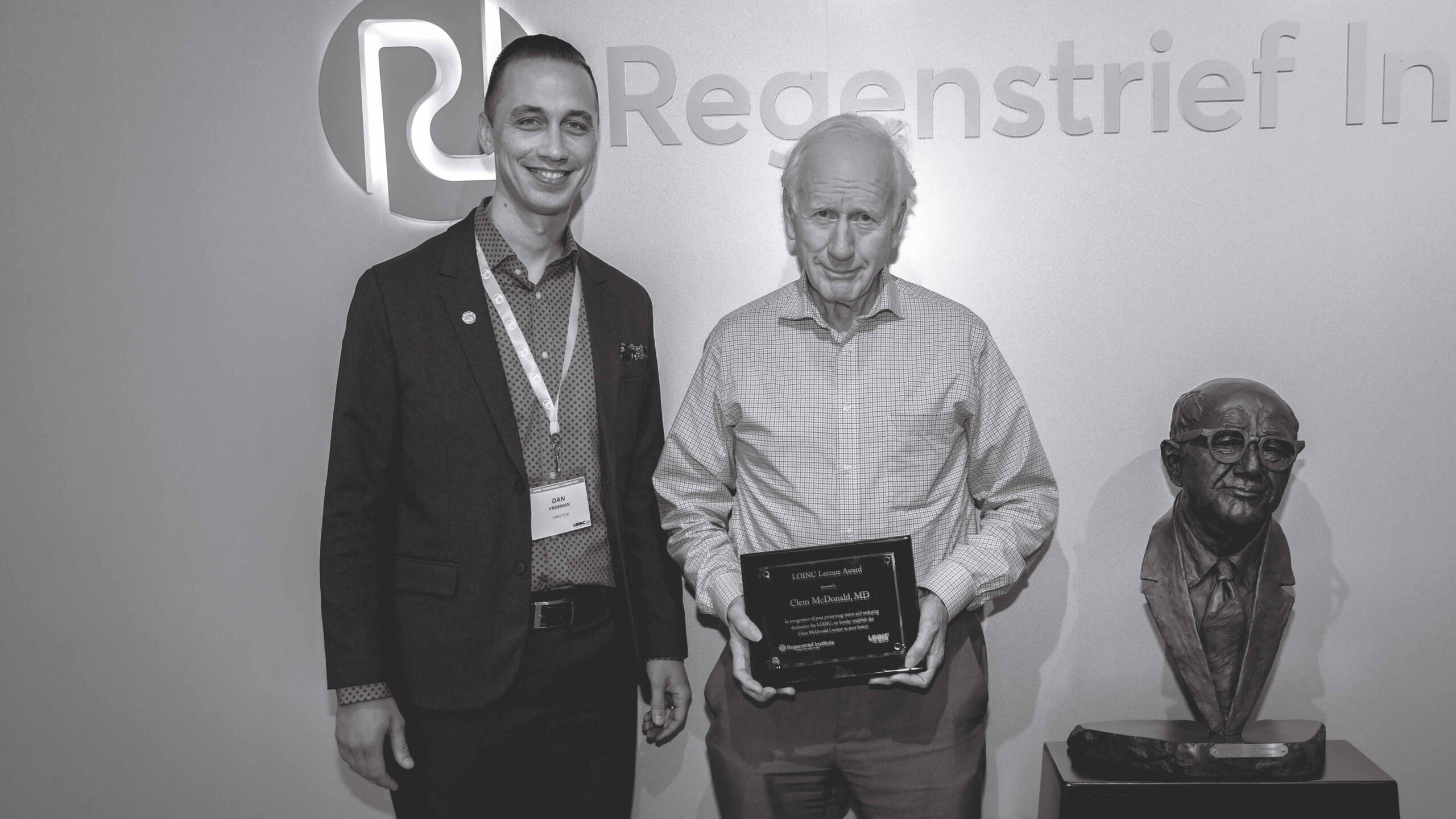
Presenting Clem with the LOINC Lectureship Award (2019).
100000-9: Health informatics pioneer and the father of LOINC:Hx:Pt:^Patient:Nar:
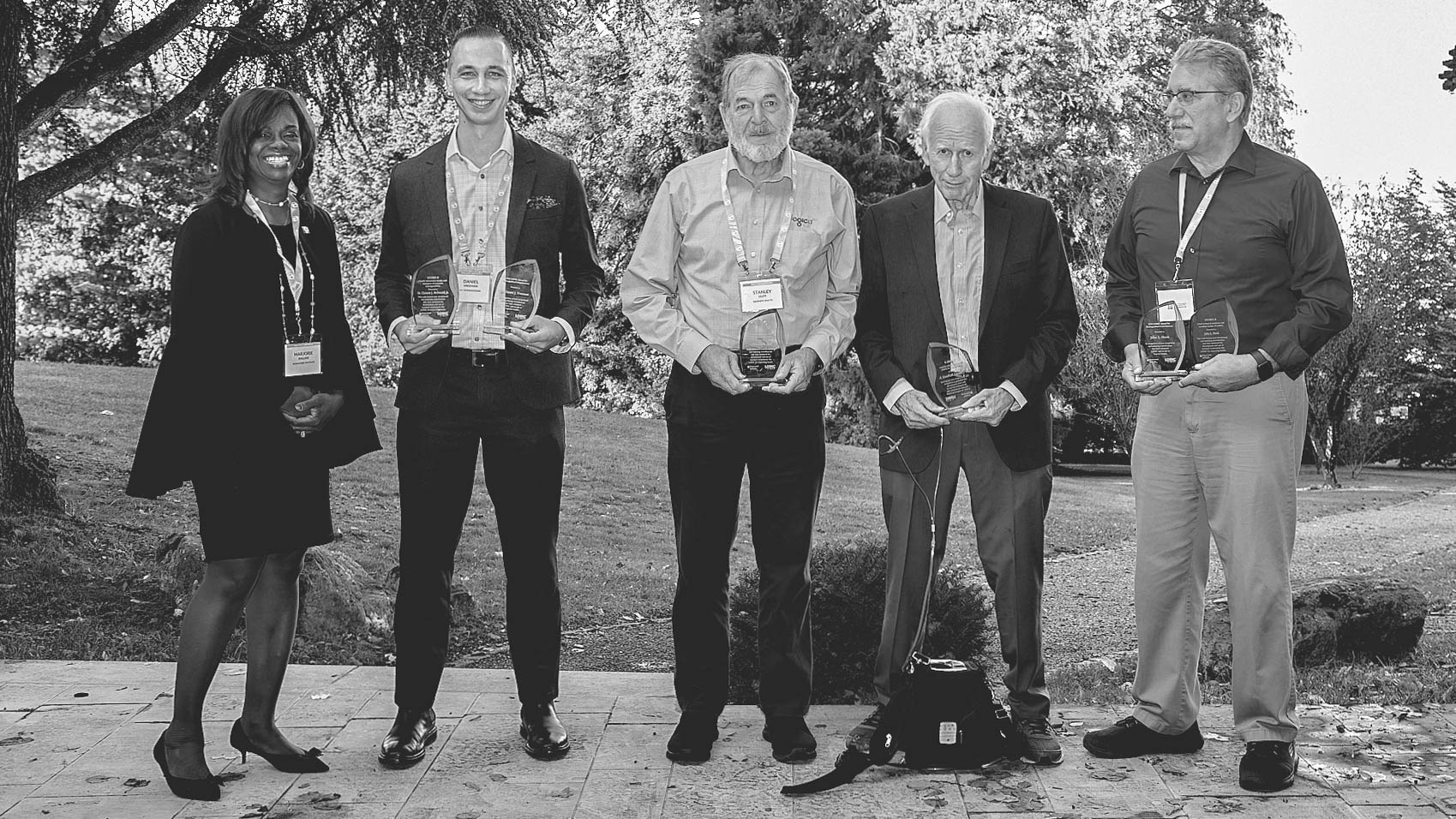
Marjorie Rallins presenting LOINC awards to Daniel Vreeman, Stan Huff, Clem McDonald, and John Hook (2022).
What I've learned
Since his passing, I have been thinking about all that Clem leaves with us. His legacy in informatics is legendary. There are many in the generations after him who have benefited from his teaching. And what he began in the health standards communities is thriving today, breaking down silos of data and enabling new digital freedoms.
Even after his decades of work, Clem said in a 2022 fireside chat:
It’s uphill, that interoperability problem. So anybody that wants to have a job for a long time, get into interoperability. It’s going to take a while to get it all done.
That’s certainly been true for me.
On reflection, there are other lessons from Clem that stay with me too.
The power of prose
Before I met Clem, I considered myself a pretty good writer. (I was not). Reading Clem’s academic papers was simultaneously humbling and inspiring. It completely changed the way I thought about communicating ideas. Vivid. Crisp. Human.
For example, in Canopy Computing: Using the Web in Clinical Practice he described both the problem and the vision for interoperability using the metaphor of the rain forest canopy:
The rain forest canopy is a seamless web through which arboreal creatures efficiently move to reach the edible fruits without any attention to the individual trees. Individual health care computer systems are rich with patient data, but rather than a canopy linking all the trees in the forest, the data “fruit” come from a diverse forest of individual computer “trees”—laboratory systems, word processing systems, pharmacy systems, and the like. These different sources of patient information are difficult or impossible to reach by individual physicians, especially from their offices.
That first sentence is one of my all time favorites. I didn’t know you could get a sentence like that published in JAMA.
As fellows we all got the book Revising Prose.
That book, and the George Gopen writing seminar I took subsequently, spurred me to hone my writing as a craft.
But a book or short course is nothing compared to the relentless, iterative feedback of working together with Clem on scientific papers.
I’ve included a screenshot here of a typical page of feedback from Clem in one of many revision cycles.
It illustrates his characteristically horrible handwriting, circles, arrows, and cross-outs.
Although undecipherable to many, when you were in sync with his priorities and perspectives it was magical!
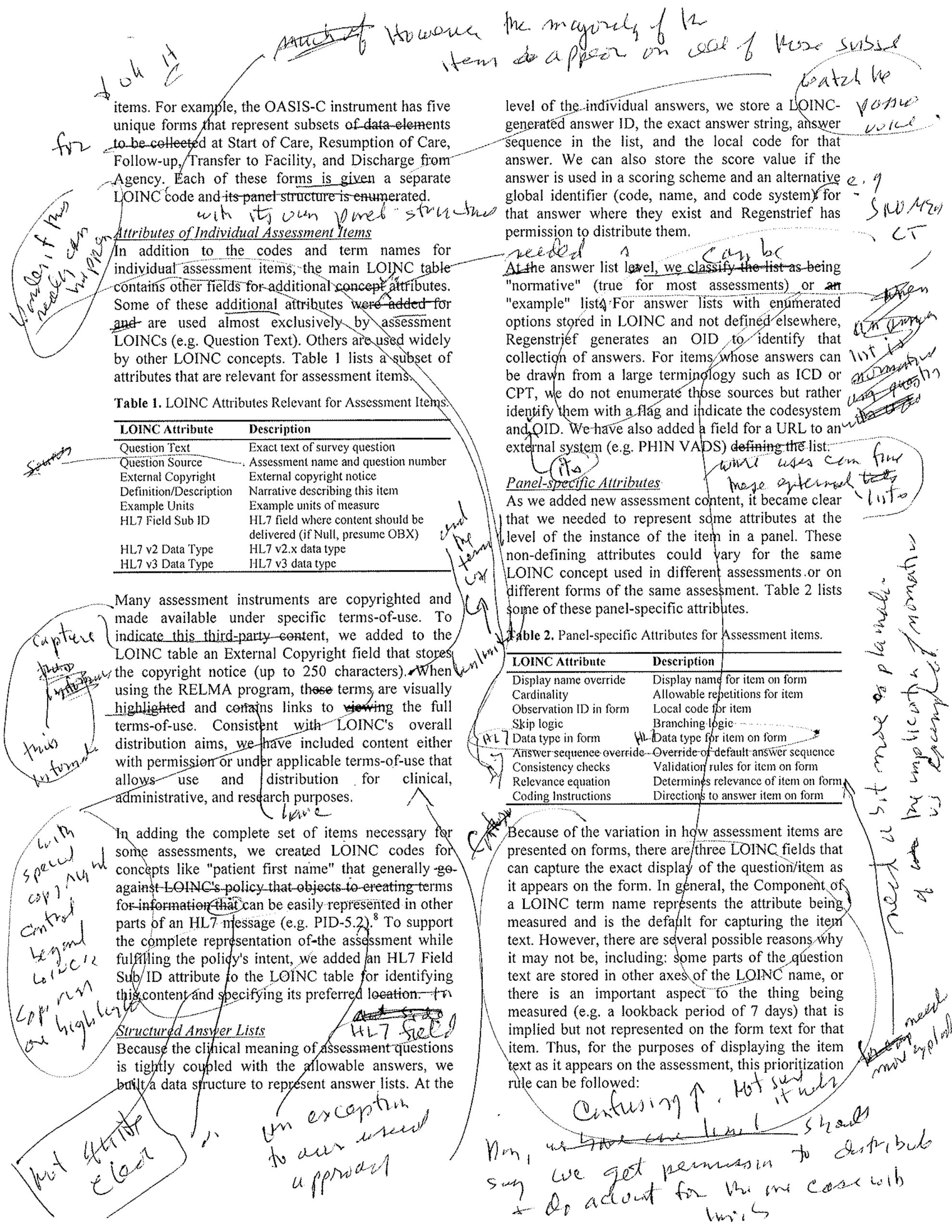
Exemplar of writing feedback from Clem
The fun part of Clem’s command of writing is that most of the time he didn’t care. He could turn it on when he wanted to. But most of the time he left that switch off.
His mind was working so quickly, it took too much effort for his fingers to keep up.
Here’s a typical email from Clem.

Always cutting straight to heart of the issue he’s trying to solve. Assuming you know exactly what he is thinking about at that moment. And completely without concern for tidiness of expression.
At least this email has body text. Many did not.
Speaking well of your spouse
Along with Clem’s frenetic energy and determination of purpose was a supportive, stabilizing force. Barbara, his wife of more than fifty years, is Clem’s perfect complement.
Most of the LOINC Committee meetings we hosted in Indianapolis would have some version of this script: Clem running around during various breaks trying to confirm which Committee members were coming to his house for dinner and arranging car pool rides, only confirming for Barbara sometime in the late afternoon the number of guests who would be arriving that evening.
With unbelievable grace, hospitality, and humor she would host us with a home-cooked meal. She was an essential contributor in fostering the camaraderie necessary for the difficult work of building consensus standards.
I got engaged during my fellowship, and married my wife Lorrie just before joining the Regenstrief and IU faculty.
It’s not uncommon to hear people in professional settings express frustration with their spouses. Clem never did that.
He always spoke of Barbara with warmth and admiration. I took mental notes, and decided that was what I wanted to do as a husband.
Never arrived. Always Becoming.
I met Clem some thirty years into his career. He received the 2004 Morris F. Collen award while I was still a fellow. Given by the American College of Medical Informatics (ACMI), an honorary society established to recognize those who have made sustained contributions to the field, the Collen award is its highest recognition. It’s an honor for lifetime achievement and significant contributions to the discipline of medical informatics.
The video made for this occasion, narrated by longtime colleague and friend Marc Overhage, is a beautiful tribute to Clem’s life, accomplishments, and global influence.
Fun fact: I posted this video to my personal YouTube channel on behalf of Regenstrief back when few knew how to get video content online.
Having achieved our discipline’s highest honor, Clem didn’t even pull into the pit stop. He never had a sense that he’d “arrived”.
Yes, part of it was his humble sensibilities. But more so was his attitude of always becoming, and spurring others to do the same. His insatiable curiosity, tireless passion for improving the care we deliver, and unwavering determination to change things for the better persisted his whole life.
These were not selfish ambitions. They were all coming from his sincere desire to be of service to others.
In the twenty plus years we worked together I constantly saw him plunge deep into emerging domains of science, medicine, and technology and come out with an understanding that let him put that new knowledge to use for the benefit of others. I loved that, and was inspired to do the same.
Together we had fun creating new LOINC terms to represent the latest clinical measurement approaches, structures to represent the constantly emerging science of genetic testing, and approaches for capturing data from patients, clinicians, and machines.
It was such a joy to work with someone who constantly lived out with benevolence his hunger to learn, share, and achieve things that no one thought were possible.
Closing
One of the most meaningful highlights of my career has been being named the inaugural Regenstrief-McDonald Chair in Data Standards. This position honored Clem (and Sam Regenstrief, founder of the Institute bearing his name), and was endowed to support the ongoing development of standards to support health information exchange.
As I wrote back then:
Dr. McDonald is a true visionary who made electronic medical records and health information exchange a reality for improving care quality and efficiency through data standards. I feel so fortunate to have worked closely with him for many years. Dr. McDonald has had such a significant impact not only on my professional career, but on health care around the world.
When I last spoke with Clem he was eager to hear about my work as Chief Standards Development Officer with HL7. We enjoyed talking about the latest innovations in interoperability that the global community was pursuing. Serving in the premiere international health standards organization, one he co-founded almost 40 years ago, I’m still proud to be part of Clem’s slipstream.
I will miss Clem more than these words can express, and I’m eternally grateful for what he brought to this world.
His legacy will echo for a long time to come.